
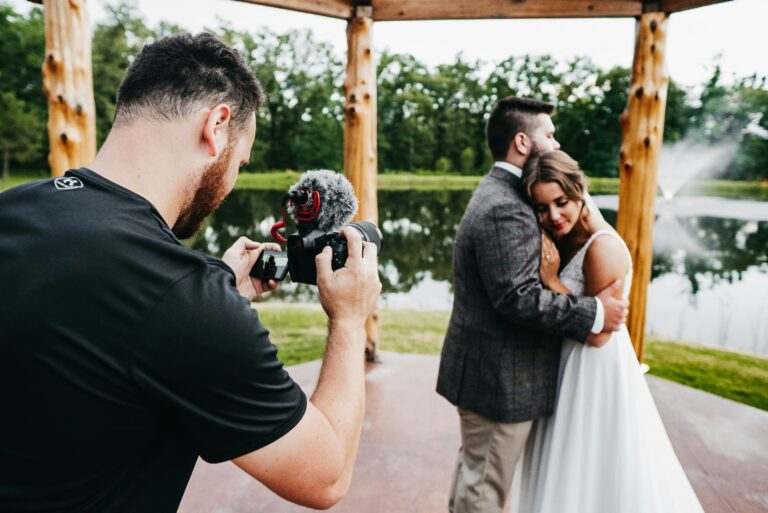
From Early Prep to Late-Night Editing
Wedding photographers are storytellers, artists, and sometimes magicians—capturing once-in-a-lifetime moments while staying almost invisible. But what really happens behind the lens on your big day? Here’s a peek into a typical day in the life of a wedding photographer, from the early morning prep to the final editing session.
1. Early Morning: Gear Check and Travel
Long before the first photo is taken, your photographer is already in motion. The morning starts with:
-
Charging batteries and packing lenses (wide-angle for venues, portrait lens for close-ups).
-
Reviewing timelines with planners or coordinators.
-
Scouting the venue for lighting and composition opportunities.
Preparation is key—nothing can slow down a wedding day like missing equipment or unclear schedules.
2. Getting Ready Shots
The first photos often capture intimate, emotional moments: the bride’s dress hanging by the window, makeup artists at work, and candid laughter among the wedding party.
Behind the scenes: The photographer balances soft natural light, fast-moving moments, and quiet observation to capture genuine emotion.
3. Ceremony Coverage
During the ceremony, photographers work discreetly—moving quietly to capture multiple angles while respecting the solemnity of the moment.
Typical shots include:
-
The walk down the aisle
-
The exchange of vows and rings
-
Reactions from family and guests
-
The first kiss and recessional
It’s a blend of timing, anticipation, and intuition—often honed through years of experience.
4. Portraits and Group Photos
After the ceremony comes the structured portion of the day—family portraits, bridal party shots, and romantic couple photos.
Behind the scenes: The photographer keeps energy high, organizes groups efficiently, and gives posing guidance that feels natural (not stiff).
5. Reception and Candid Moments
As the celebration begins, the photographer switches gears—capturing toasts, dances, décor details, and joyful candid moments. Lighting often changes dramatically, so photographers use creative flash or ambient lighting to maintain consistency.
Tip: Many photographers also sneak in quick “golden hour” shots around sunset for that soft, glowing magic.
6. Late-Night Editing
Once the party ends, the work isn’t over. Most photographers spend hours (or days) afterward:
-
Backing up files for safety
-
Selecting and editing the best shots
-
Adjusting lighting, color, and contrast
-
Creating sneak peeks for couples excited to relive the day
Editing is where the artistry truly shines—turning hundreds (or thousands) of raw images into a cohesive, emotional story.
Final Thought
A wedding photographer’s day is filled with energy, precision, and passion. From the quiet moments before “I do” to the last dance, they’re there to preserve every detail—so you can relive it for a lifetime.